BFL#: 475 (4th of the year)
Name: William Mitchell
Date: Missing from 15th March - found 17th March 2024
Nationality: American
Location: Perrine Bridge, Twin Falls, Idaho, USA
Object Type: Span
COD: Impact nothing out
Clothes/Suit: slick
Gear/Parachute: Squirrel Cirrus
Age: 37
Skydive Experience: 8500+
BASE Jumps: Unknown
Years/Seasons: Unknown
Time of day: Unknown
Other factors: Unknown
Exit Altitude: 486 feet (148 metres)
Conditions: Cold temperatures
Wind: Unknown
Description:
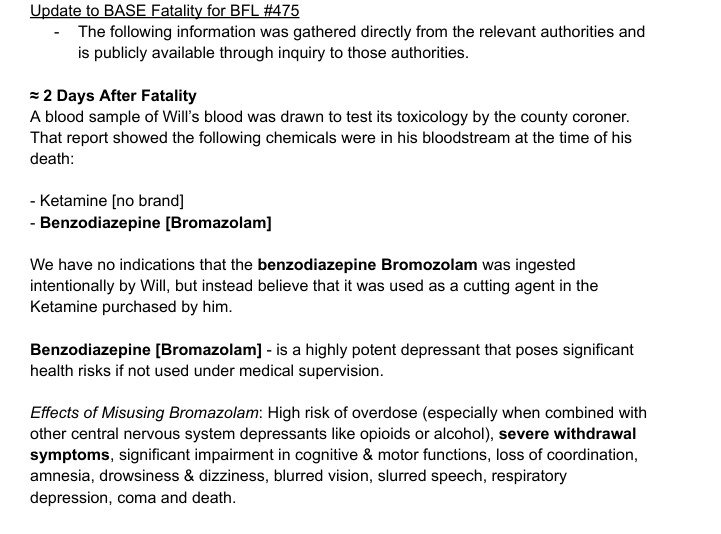
The detailed riggers report is all we are aware of Will had been missing for a few days and was found in the waters of the Snake River.
Family have been notified and have been helping with information.
Updated Riggers report with gear:
Magic Backpacks LLC
Jacob Gardner, FAA Master Parachute Rigger
jacob@magicbackpacks.com
19 March 2024
Equipment inspection report
Date of incident: Mar 15 - Mar 17, 2024
Incident: fatality
Parachutist: William Mitchell
Temperature: Unknown, wearing multiple layers appropriate for cold
Winds: unknown
Time of the day: approx. – unknown, speculative very early morning/night
Inspection has been conducted on the following equipment:
Parachute: Unknown at this time, Squirrel Manufacturing from blue
bartacks seen.
Harness/Container: Squirrel CIRRUS
-Visual inspection minimal invasion of key components- pending full gear inspection.
Facts collected by inspection of the equipment/parachutist:
1. The parachutists left lower container, front/side thigh, and side area clothing and rig appeared to have taken first impact. The container fabric layers around the left lateral harness/backpack/side flap peeling apart appearing to be “Blown out.”
2. The parachutist’s container pin cover flap was tightly closed top to bottom, no lifting of the edge at bottom of closing flap.
3. The closing pin (closest to the pilot chute) was free from the closing loop, bottom closing loop was undamaged.
4. After Detectives carefully opened the pin cover flap under guidance- the Top closing pin (pin closest to parachutist’s head) was still inside the closing loop, 99% extracted but still lying 100% flat on its side. This pin was free to move and popped free shortly after inspection.
5. The pilot chute was not in the BOC (Bottom of container) pouch and bridle was attached correctly and at full extension. The fold creases for the excess between pins was still crisply visible but unfolded, and the routing to canopy was still neatly tucked away into container as per Manufactures instruction.
6. The last 2 feet of bridle before pilot chute was cut cleanly during recovery as it was suspended below the waters surface at full extension acting as an anchor.
7. The bottom flap was folded open 3/4, with only the “bottomless corners” container feature holding the containers bottom shaping.
8. The parachutists right “ear” of the parachute packjob was neatly unfolded from the container, but the individual layers were still compressed together. Upon visual inspection of this small portion, the proper pieces of fabric (canopy Nose and nose support tape) were visually confirmed to be in the correct orientation for a working pack job.
9. Pilot chute and last 2 feet of bridle was inspected and measured without and apparent damage, and PC properly connected. PC was a 46” non vented pilot chute with a Cordura patch handle, older but in good condition.
Observations and inspection information:
1. Fact 2 and ground tests suggest-that the pilot chute was never deployed in freefall. The pin cover flap was tucked fully and very snugly into position with no evidence the bridle had tried to deploy behind the parachutist in freefall. The flap could have been bumped closed during the recovery/transport/storage, but as I and detective McRoberts noticed, it was a snug fit (not overly tight), with specific pressure points to close the low-profile pin cover flap back after inspection. The other thing it suggests could be possible is that the pilot chute was deployed at an EXTREMELY low altitude, less than the length of the bridle.
2. Taking many of the facts into account, as well as information from Detective McRoberts about the recovery and the deceased body position on arrival of recovery crew- It likely suggests the pilot chute could have acted as an anchor, slowly removing the bottom pin straight out the bottom of the pin cover flap when the deceased was removed from the water before the bridle was cut. Extraction at this straight vertical angle wouldn’t pry up the pin cover flap at the bottom edge as it would from a belly to earth deployment, or a “Pin locked” container.
3. The way the parachutist impacted the water could explain how the pilot chute was removed from the BOC pouch.
4. The 46” Non vented pilot chute is 4” larger the typical size used for jumping an object of such height as the Perrine Bridge. Hanging below parachutist in the water at full bridle length would present substantial hindrance to recovery efforts as it would have a very high surface area and drag when pulled on from above.
Plenty of force to allow pin to be extracted as the rig was lifted from water.
5. If the bridle entangled the parachutist, often there are visual streaks of burn marks on any exposed skin it contacted. With the parachutists’ multiple layers of clothing, it’s likely it would have left no evidence. No burn streaks or marks seen, but the bridle was wet at time of inspection and could be hiding.
Personal opinion and conclusion.
After considering all the information available and trying to reproduce the facts/results as well as other ground test examples, I do not believe the pilot chute was ever removed by the parachutist before impacting the water.
I don’t professionally think that facts 8 and 7 are possible if the parachutist deployed before impact. If the canopy folds had been exposed to the water current for any period, the fabric folds wouldn’t have been cleanly creased and folded still. This is a common sign that a parachute has been packed inside the container under tension for a longer period before being opened.
If the bottom flap was opened pre-recovery and exposed and flapping in the light current for any significant period, the canopy would not still be neatly folded fully seated, it most likely would have slid down (even a little), potentially completely out of the container.
The bottom pin holds most of the tension, without it a canopy will typically fall out onto the ground. I do believe the pilot chute was most likely removed by the impact force/position on impact, allowing the pilot chute to sink and the drag in water to open the bottom pin of the container accidentally during recovery efforts.
This would explain why the pin cover flap wasn’t opened slightly at the bottom edge, as well as why the top pin wasn’t in the “standing” position vs lying flat.
Can you help us with incident interpretation? We are interested in any details regarding personal experience, gear, weather conditions and any other circumstances related to the incident.