This was our fifth training outing in mountaineering: three days in May, followed by two more in June.
The day before, we had climbed the Bruyères ridge — our third ridge climb together — and we had planned to end this training cycle with a wingsuit jump.
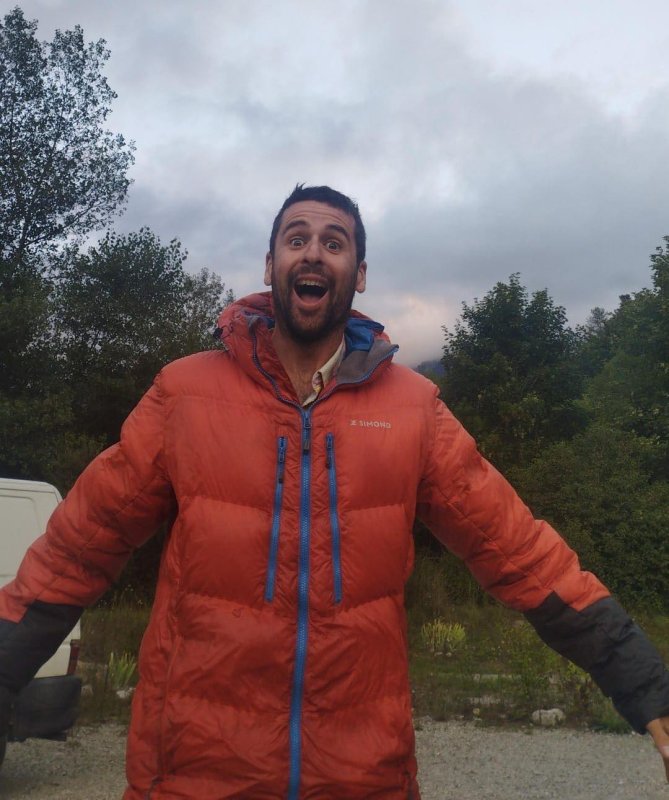
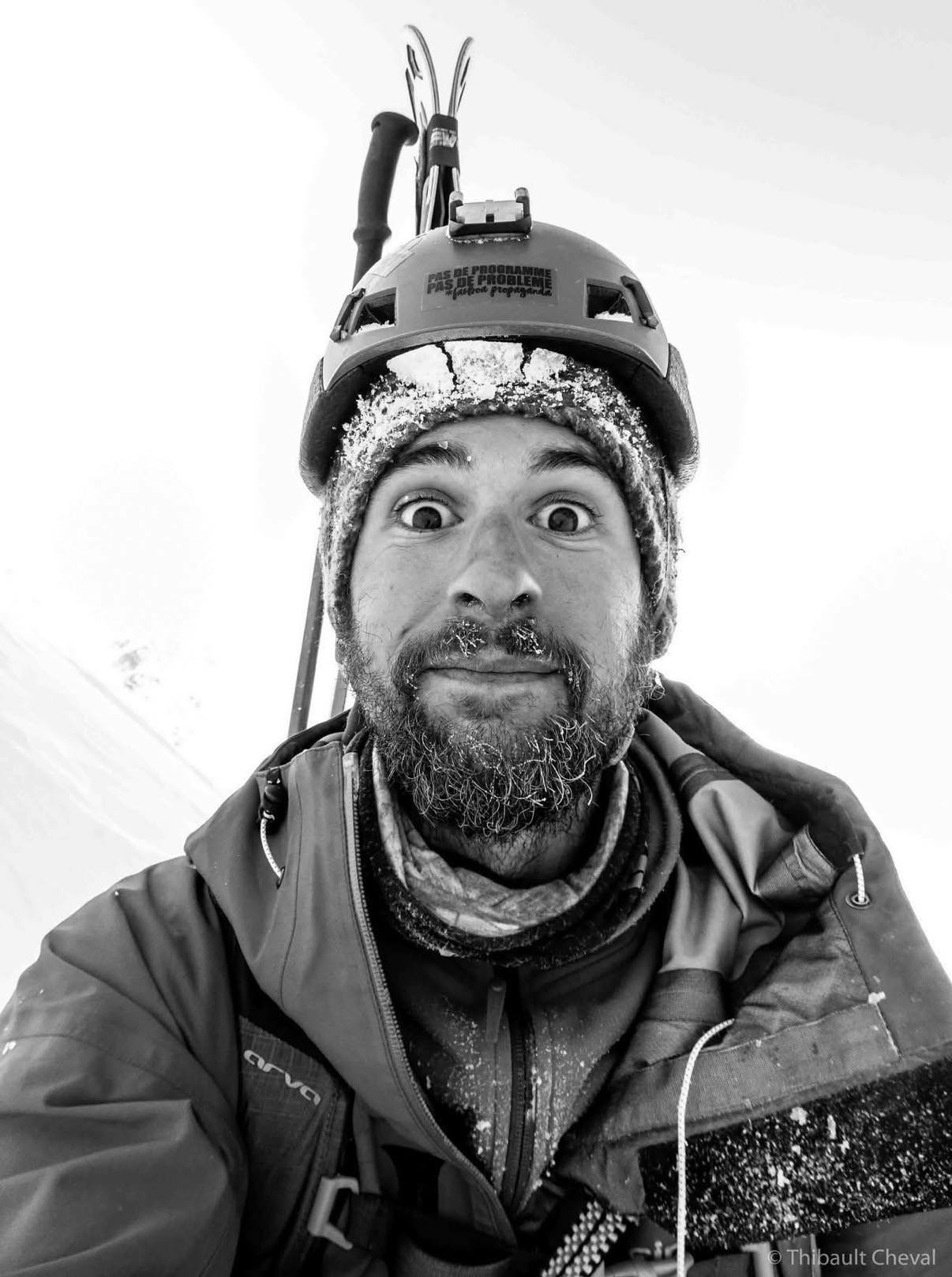
Thibault had been a high mountain guide for several years. He had done this particular jump one or two years earlier, I believe — he showed me the video the day before.
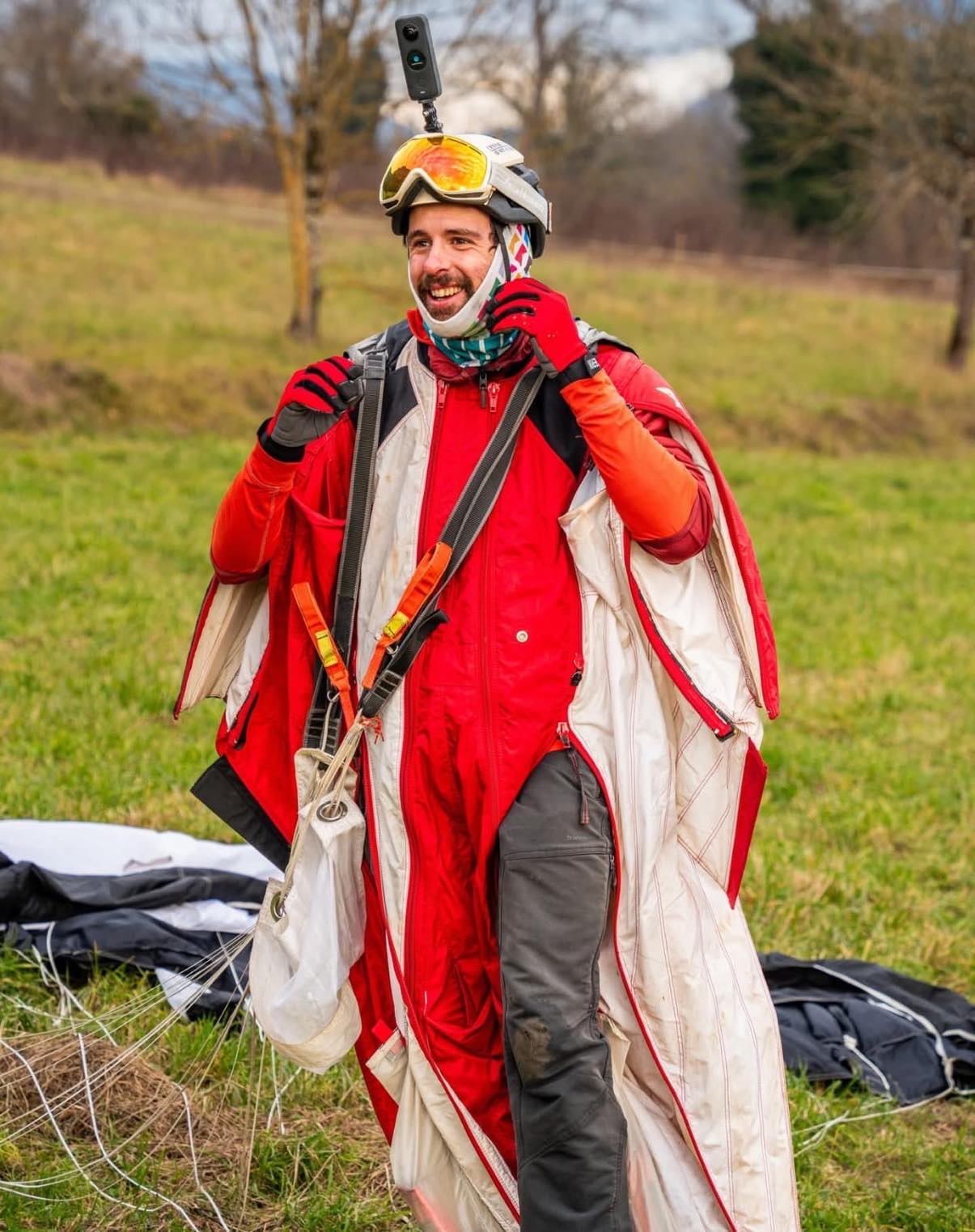
He was experienced in wingsuit flying, having practiced for about ten years and completed several hundred jumps. A few days prior, he had done a solo wingsuit jump and had already jumped several times this year, though I’m not sure how many.
As planned, we took the first cable car from La Grave at 7:30 a.m. By 8:00, we were roped up and had our crampons on.
We crossed the glacier quickly, with Thibault leading, until we reached the base of the southeast ridge of the Trifides. It was 8:30.
This time, I led the climb, with Thibault seconding.
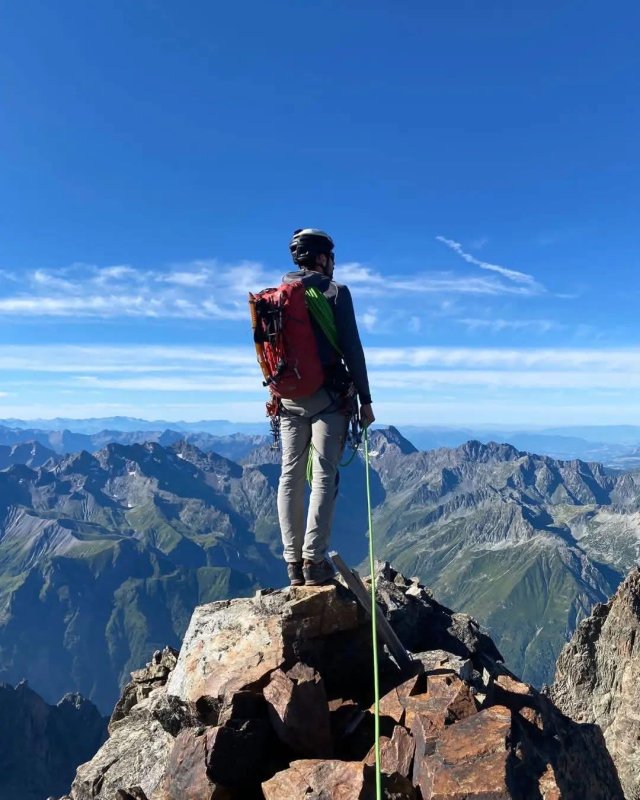
The route was beautiful, the conditions perfect: bright sun, a light breeze, and incredible views.
After two hours of climbing, we reached the summit at 10:30. We took a break to enjoy the panorama. Physically, we felt good — no notable fatigue.
We prepared our wingsuits and packed our respective gear: crampons, ice axe, jacket, harness… I took the 40-meter rope inside my wingsuit; Thibault carried the rest of the gear (8 quickdraws, 4 cams, 2 slings).
We geared up as we had rehearsed the day before. Then I rappelled first using a rope that was already in place.
Conditions were ideal: a perfectly blue sky, and a light headwind of around 5 knots at the exit.
Before I unclipped, Thibault reminded me to visualize my push direction clearly.
I decided to push slightly to the right and told him. We did a final check. I wished him a good flight.
He was right behind me, slightly higher up. He said he was filming my exit.
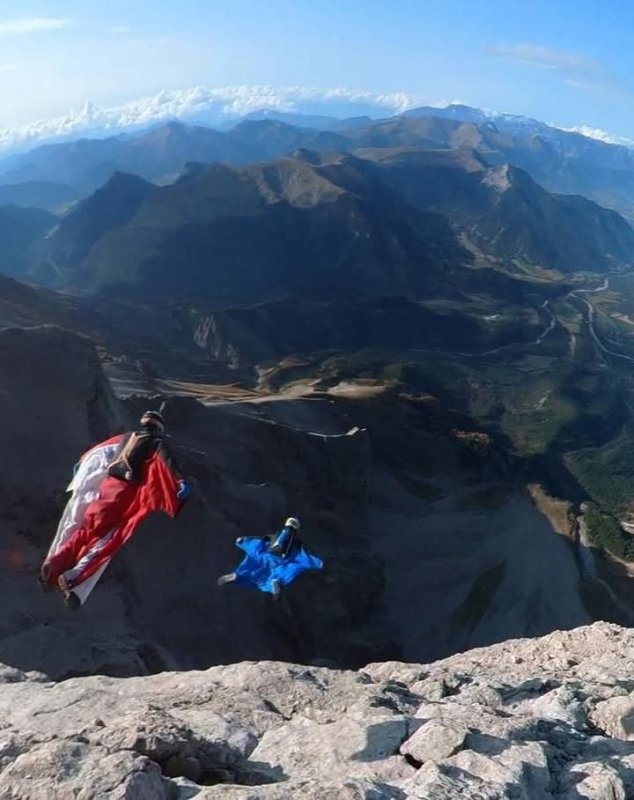
I jumped around 11:15 a.m. I pushed off with both feet from a rock point that felt solid, just above a makeshift wooden platform set into a rock ledge where we had finished gearing up, safely clipped in.
The exit went well. The jump profile wasn’t technically demanding — that’s why Thibault had chosen it.
The numbers were: 140-20 / 200-40 / 370-90 — a 400-meter wall.
The flight was straightforward — a long straight line through the air with no terrain to follow.
I deployed at a comfortable altitude, just above the start of the forest, and landed as planned on a final patch of frozen snow, where the river begins, at the bottom of the valley.
We had each planned separate flight paths and landing zones. I was flying an Aura 5 — a larger suit with better glide — and Thibault was in a smaller Strix.
I landed softly, facing into the valley wind. A gentle breeze was rising from the valley floor.
I turned around, but didn’t see him jump.
I tried calling, with no success. He had warned me that there might not be cell service where he was planning to land.
I packed my gear and started hiking down the trail at around 11:45.
I reached the car about an hour later, changed clothes, and tried calling him again — still nothing. It was 12:45.
At the mid-station of the gondola, I spoke with the staff. They said they couldn’t see anything through their binoculars.
Thibault had planned to return via the gondola from the mid-station and then meet me at the car. I was told that depending on where he landed, it could take him one to two hours.
I kept trying to call, but there was still no answer.
At 2:00 p.m., I called the PGHM (mountain rescue) in Briançon. The helicopter was dispatched and on site 40 minutes later.
At 3:00 p.m., I called them back. They told me they had found his lifeless body on a snowy ledge, 200 meters below the Trifides exit — his parachute was open, and one leg wing zipper was open on the side where it appeared he had impacted.
His camera wasnt recovered
Can you help us with incident interpretation? We are interested in any details regarding personal experience, gear, weather conditions and any other circumstances related to the incident.